
Financial markets appear to be reacting to new developments in the Middle East midweek. According to reports, the US Air Force has struck Iranian missile positions near the Strait of Hormuz, reportedly destroying key military infrastructure that had threatened shipping routes. Following the news, markets showed increased activity, which may indicate at least a temporary easing of tensions.
The reaction in the oil market is clearly reflected in the prices of WTI and Brent crude oil. The price of a barrel of US WTI crude fell overnight to a key support level around 91 US dollars and is currently trading near 92.50 USD. Brent crude also declined and is now trading below the 100 US dollar mark at around 99.50 USD.
Falling oil prices support equity markets
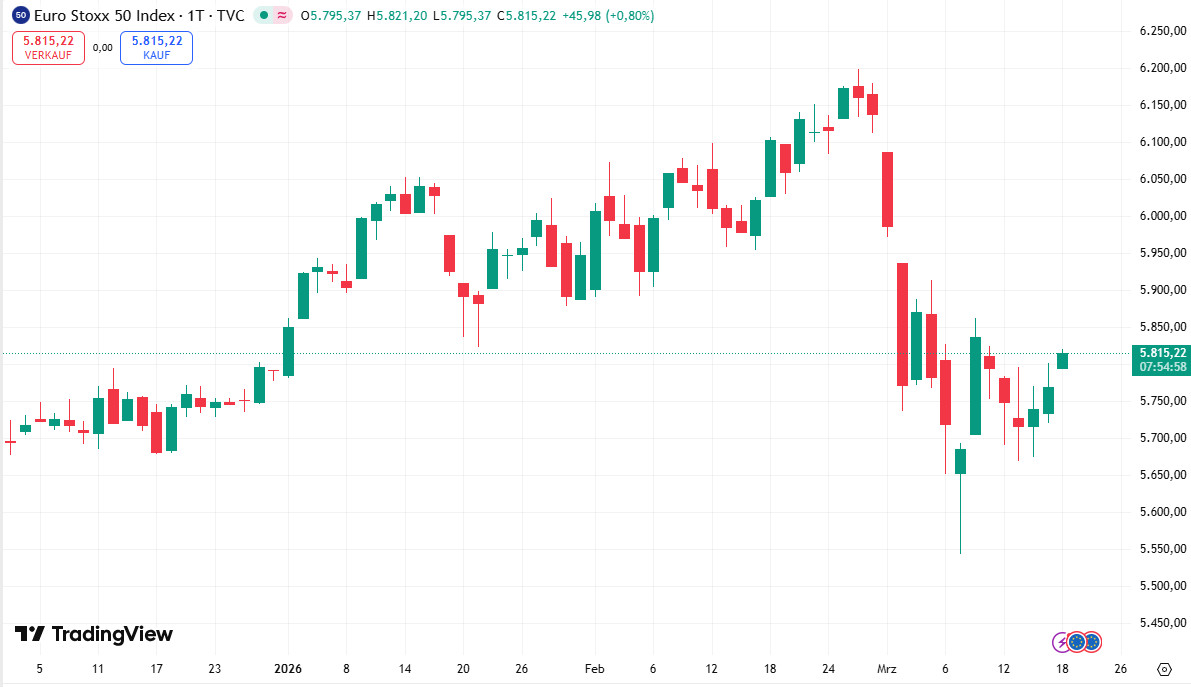
Falling oil prices are having a positive impact on the stock markets and major indices such as the DAX and Euro Stoxx 50. Lower energy costs reduce potential pressure on companies and the broader economy. A possible easing of tensions in the Strait of Hormuz may also alleviate concerns about disruptions in oil supply, which is reflected in improved market sentiment.
The DAX is trading around 0.60% higher after the market open, while the Euro Stoxx 50 is up approximately 0.94%. US index futures are also pointing higher ahead of the open, currently gaining around 0.65% on average.
However, further developments in equity markets may remain cautious. The Federal Reserve’s interest rate decision is scheduled for 19:00 CET. While no change in rates is expected, market participants will focus on the accompanying statement and comments from Fed Chair Jerome Powell during the press conference at 19:30 CET for clues about future monetary policy.
The press conference will be broadcast live and can be followed via the official Fed livestream.
Dollar weaker, gold remains under pressure
In the foreign exchange market, the US dollar is showing slight weakness. The EUR/USD exchange rate has risen back above the 1.15 level. The reduced demand for the dollar may indicate that investors are currently seeking less hedging.
Meanwhile, gold remains weak and continues to struggle with the 5,000 US dollar per ounce level. Despite the geopolitical backdrop, the precious metal is not managing to sustainably benefit from its role as a safe haven.
Crypto market remains stable
The crypto market appears relatively unaffected by the latest developments. Bitcoin continues to attempt a sustained move above the 74,000 US dollar level. This suggests that the digital asset space remains largely detached from short-term movements in traditional markets.
Conclusion
Current market movements suggest that investors are interpreting the latest developments in the Middle East as at least temporarily easing. The decline in oil prices appears to be a key driver of the improved sentiment in equity markets.
At the same time, the environment remains fragile. Further geopolitical developments could quickly provide new impulses and reverse the current trend.