




After a cautiously positive start to European trading, sentiment in financial markets deteriorated noticeably in the early afternoon. The trigger may have been new concrete threats from Iran against energy infrastructure in the Gulf region.
According to reports, Iran’s Revolutionary Guards have called for the evacuation of several oil and gas facilities in Saudi Arabia, the United Arab Emirates, and Qatar. The indications of potential attacks are increasing concerns about the stability of global energy supply and are causing noticeable movements in the markets.
Oil prices rise significantly
The reaction is particularly evident in the oil market. Brent crude has climbed back above the 100 US dollar level and is currently trading at around 106 US dollars per barrel, while US WTI has risen to approximately 98 US dollars. This suggests that a renewed risk premium for potential disruptions to production and transport chains is being priced in.
Equity markets turn negative
Rising oil prices and growing uncertainty are weighing on equity markets. The DAX has turned clearly negative and is currently down around 0.70%. In the US, major indices also opened weaker on Wednesday. The Dow Jones is currently down about 0.75%, the S&P 500 is losing around 0.45%, and the Nasdaq 100 is trading roughly 0.40% lower.
The development suggests that investors are increasingly pricing in risks to the global economy as well as higher costs resulting from rising energy prices.
US dollar shows limited reaction
In the foreign exchange market, the picture is more mixed. The US dollar only benefited briefly from the increased uncertainty and continues to trade above the 1.15 level against the euro.
The relatively muted reaction of the dollar may indicate that investors are not fully shifting into traditional safe-haven positions, but are instead building liquidity and reducing exposure across different asset classes.
Gold and cryptocurrencies also under pressure
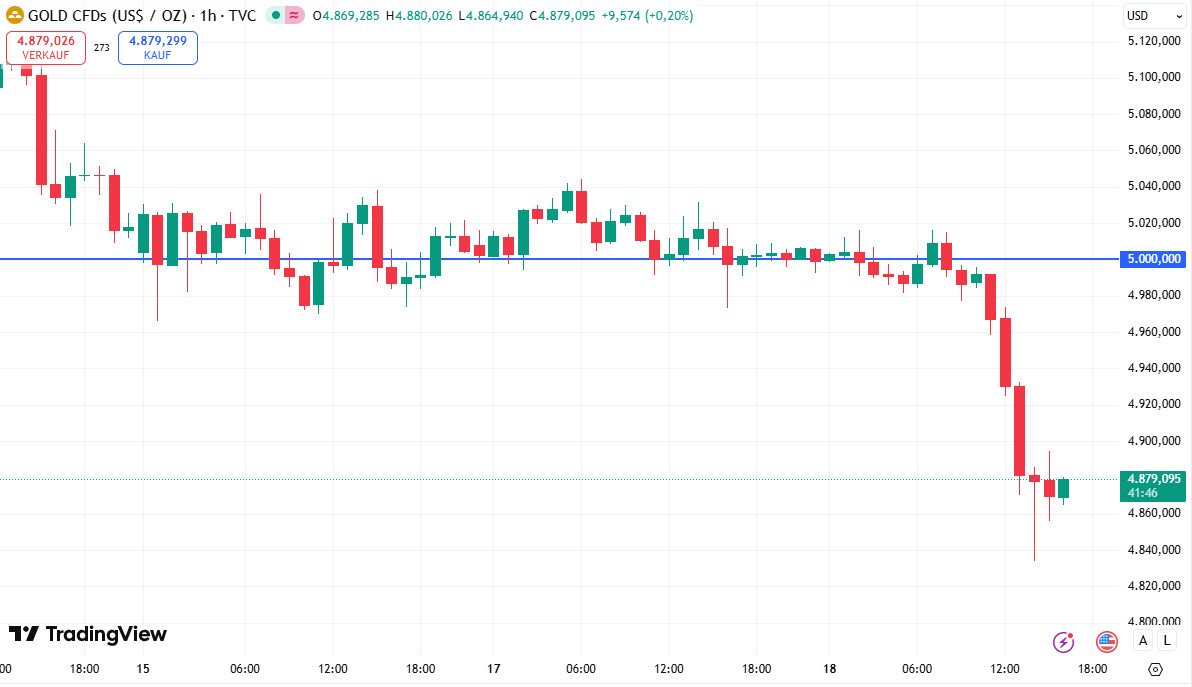
Both traditional and alternative asset classes are showing weakness. Gold has fallen clearly below the 5,000 US dollar level and is currently trading at around 4,873 US dollars per ounce.
Bitcoin is also under pressure, dropping to around 71,200 US dollars, representing a decline of approximately 3.7%. This suggests that investors are currently increasing liquidity and reducing risk exposure.
Conclusion for market participants
The latest threats against energy infrastructure in the Middle East are leading to a clear reassessment in the markets. While oil prices are rising, equities, precious metals, and cryptocurrencies are coming under pressure at the same time.
At the same time, recent developments have shown that market movements can quickly reverse as news flow changes. For investors and traders, this creates a challenging environment in which short-term impulses are playing an increasingly important role.