Financial markets appear surprisingly stabilized after recent geopolitical tensions. While the situation around the Strait of Hormuz had been marked by significant risk premiums in recent days, the current lack of immediate military actions is now contributing to a noticeable easing.
One trigger for the latest move was a statement by US President Donald Trump, suggesting that Iran remains interested in an agreement. Similar signals in recent weeks had repeatedly triggered short-term recoveries, which, however, later proved to be unsustainable.
Lack of new attacks seen as positive signal
In the current situation, however, a potential difference is emerging: despite the now ongoing blockade of Iranian oil exports and continued mutual threats, there have so far been no confirmed military incidents at sea. There are also currently no reports of new attacks on Tehran or military bases in Iran. As a result, the ceasefire remains stable for now, and immediate escalation is avoided, which markets interpret as a cautiously positive signal.
The key question now is how the situation develops over the next 24 to 48 hours. Observers assume that Iran may use this phase to test the actual enforcement of the blockade at sea without immediately risking open military confrontation.
If no incidents or military clashes occur during this period, it could further support the current market stabilization. At the same time, it remains unclear whether this represents a sustainable de-escalation or merely a temporary phase without immediate military action.
Oil price declines significantly
After oil prices had already fallen below the 100 US dollar per barrel mark on the spot market yesterday morning, futures have now followed. May futures on WTI crude are currently down around 1.60% and are trading at approximately 97.50 US dollars. Futures on Brent crude are down 0.41% and are currently at around 98.95 US dollars per barrel.
Falling oil supports stock markets
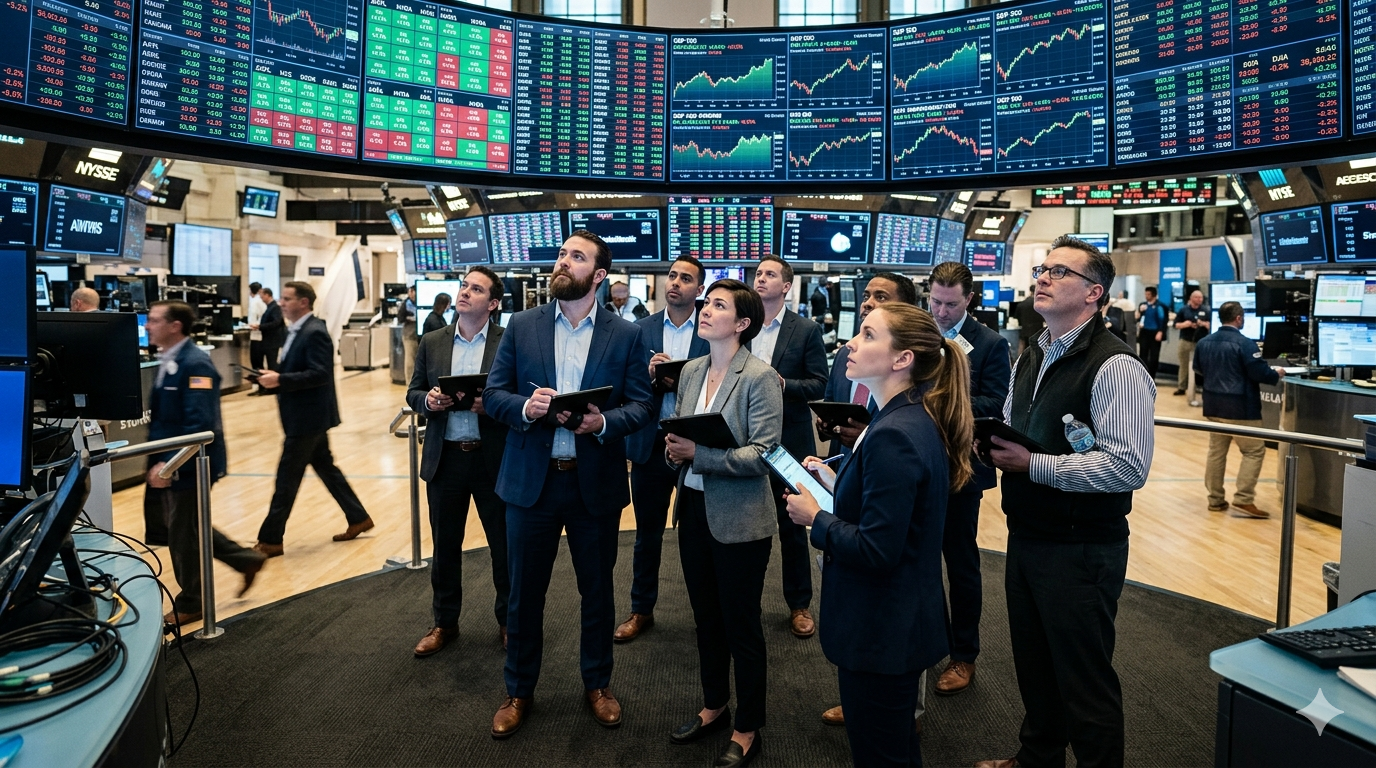
Stock markets are currently driven by expectations of further de-escalation and declining oil prices. After markets had started the week significantly lower due to failed negotiations, sentiment improved noticeably during the afternoon. European indices were able to recover most of their losses by the close, while US indices moved clearly into positive territory by the evening.
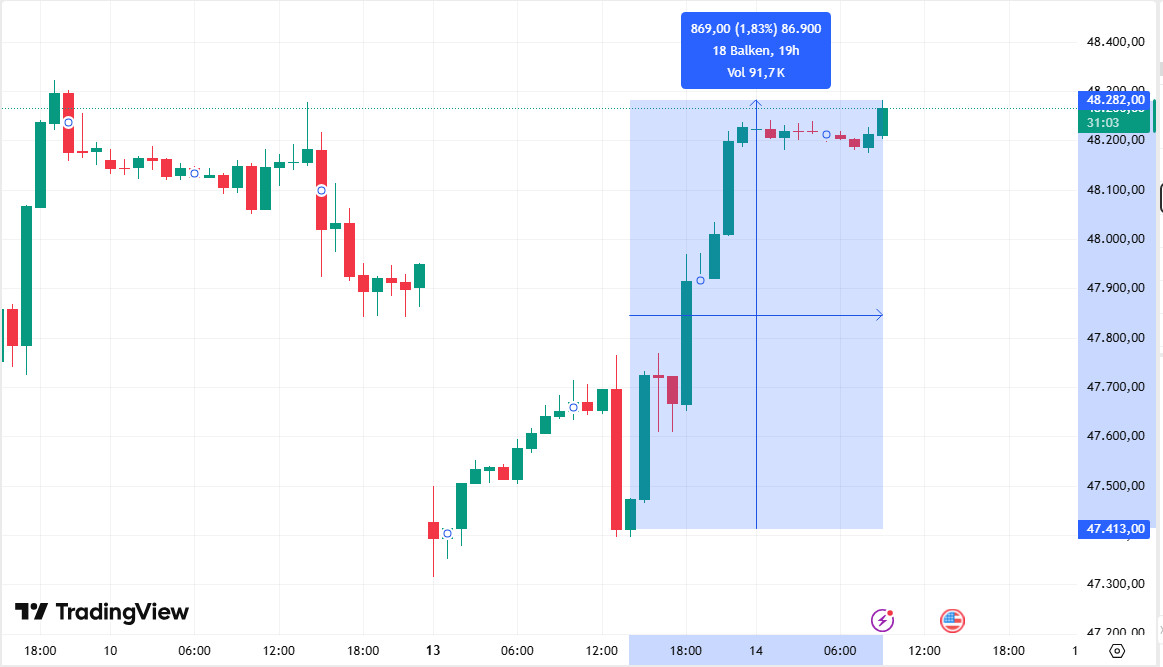
In pre-market trading, the German benchmark index DAX is currently up a solid 0.76% at around 24,103 points. The Euro Stoxx 50 is up 0.68% pre-market, while the French CAC 40 shows a more moderate gain of 0.20%.
US index futures, on the other hand, show little movement this morning after already closing the previous trading day with strong gains.
Weaker US dollar, firm gold price
The falling oil price and the associated lower demand for US dollars in global trade are weighing on the US currency. Against the euro, the dollar is currently trading at 1.1780, down around 0.18% on the day. The USD/JPY pair has also moved away from the 160 level and is currently down 0.21% at around 159.09.
The gold price, on the other hand, is benefiting from the weaker dollar. After starting the week at around 4,650 US dollars per ounce yesterday, it is now trading at approximately 4,786 US dollars and is once again approaching resistance near 4,800 US dollars.
Bitcoin and altcoins on the rise
The crypto market shows a clear recovery this morning. Bitcoin is currently up around 5.45% and, at approximately 74,621 US dollars, has risen above the 74,000 US dollar mark for the first time in four weeks.
Ethereum is performing even more strongly. The second-largest cryptocurrency by market capitalization is up around 9.2% and is currently trading at approximately 2,385 US dollars. This makes ETH one of the strongest performers among major cryptocurrencies at the moment.
Plenty of hope, but fragile markets
The current decline in oil prices and the recovery in equity markets appear to be largely driven by hopes that the current calm could lead to a lasting de-escalation in the region. At the same time, it remains unclear whether and to what extent negotiations are actually continuing behind the scenes.
As long as there are no concrete developments or confirmed agreements, the situation remains fragile. This means that the current recovery – similar to previous weeks – could quickly lose momentum again if tensions escalate.