
An attack on a tanker off the Iraqi coast initially caused nervousness in financial markets overnight. As seen in several incidents in the Persian Gulf in recent weeks, a now familiar pattern emerged: oil prices jumped sharply in the short term, stock indices came under pressure and traditional safe-haven assets such as gold moved higher.
However, only a few hours later a counter-move began. As no further signs of escalation emerged, markets calmed again, risk assets recovered and part of the initial price movements was reversed.
Oil prices initially react strongly
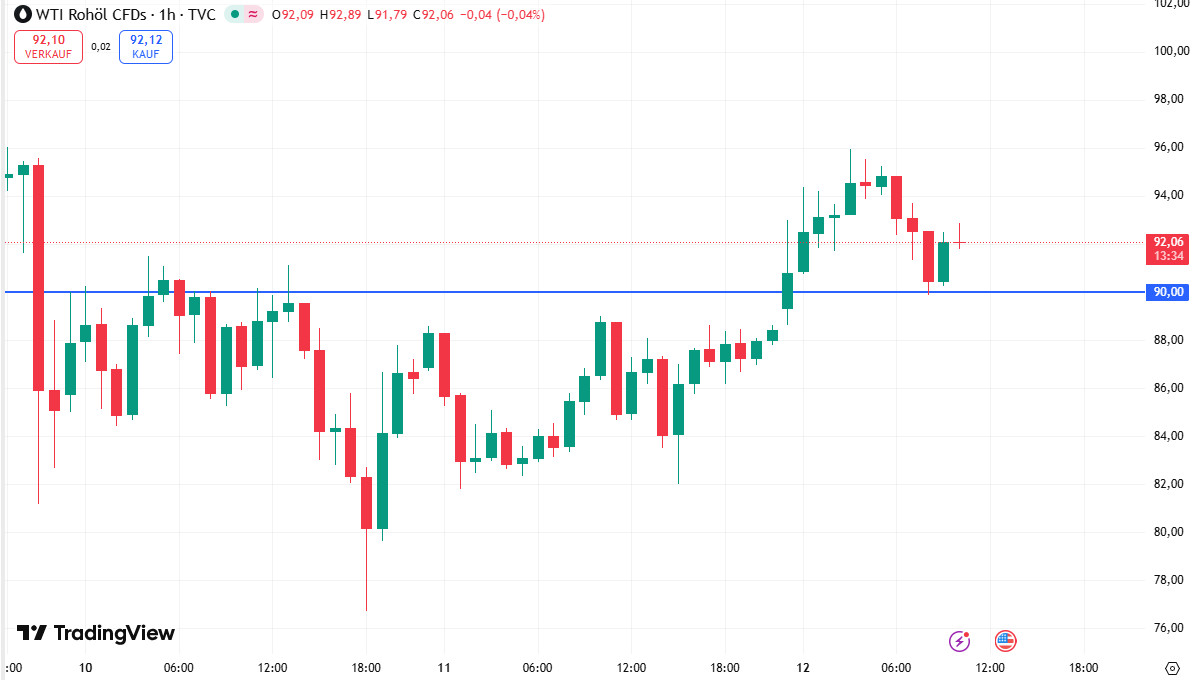
The most immediate reaction occurred in the energy market. The price of a barrel of the US benchmark WTI briefly climbed to nearly 95 US dollars overnight, while the North Sea benchmark Brent also moved significantly higher.
In the meantime, however, the situation has calmed again. WTI is currently trading at around 91 dollars per barrel, noticeably below the overnight highs. Brent has also given back part of its gains. The development suggests that traders are pricing in a higher short-term risk of possible disruptions to oil supply, but tend to reassess this view quickly when an immediate escalation fails to materialize.
Stock markets recover after the initial shock
A similar pattern can be seen in equity markets. After the first reports of the attack, major indices initially came under pressure as investors reacted to potential risks for energy supply and the global economy.
As the immediate uncertainty eased, however, markets began to recover. Many market participants appear to price in geopolitical headlines cautiously at first before reassessing the actual economic implications. Germany’s benchmark DAX started the trading day almost unchanged and is currently showing a slight decline of around 58 points.
Dollar gains – gold remains stable
In the foreign exchange market, the US dollar posted moderate gains, benefiting from its role as a traditional reserve and safe-haven currency. During periods of geopolitical uncertainty, capital often flows into the dollar, which can provide short-term support for the greenback.
Meanwhile, gold prices remain stable at elevated levels. Although a stronger US dollar typically acts as a headwind for gold, the precious metal managed to hold on to part of its recent gains. This suggests that some investors continue to seek protection against geopolitical risks.
Later in the day, US economic data could provide additional impulses. Weekly initial jobless claims will be released at 13:30. Following the recently weaker labor market data, investors are paying close attention to whether further signs of cooling in the US labor market might emerge. The labor market is considered one of the most important indicators for interest rate decisions by the Federal Reserve.
Conclusion
The latest market movements once again highlight how sensitively investors react to geopolitical headlines. At the same time, they also show that such reactions are often short-lived.
Markets tend to react reflexively to new risks before traders and investors more carefully assess the actual implications for supply, demand and the broader economy. As long as individual incidents do not lead to a sustained escalation, many of these movements may remain temporary. For investors and traders, this currently creates a rather challenging market environment.