More than 48 hours after the escalation involving Iran, financial markets continue to react sensitively at the start of the new trading week. Recent developments, including reported attacks on Saudi oil infrastructure, have reinforced geopolitical risk considerations.
While the overall market reaction remains controlled, risk premiums in selected asset classes appear to have increased, particularly in energy and safe-haven assets.
Oil Remains the Central Focus
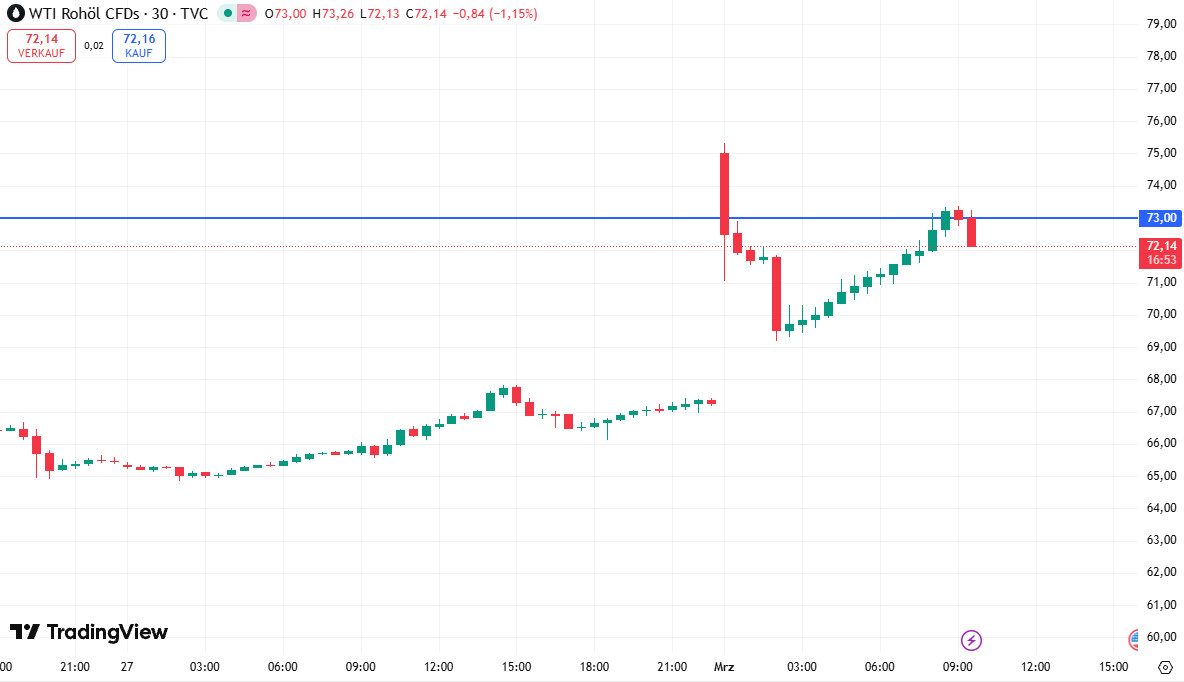
The oil market continues to be at the center of attention. Reports of attacks on Saudi oil infrastructure have intensified concerns about potential supply disruptions, even though the full extent of operational impact cannot yet be conclusively assessed.
WTI crude is currently encountering resistance near the 73 USD per barrel level. The inability to break significantly higher so far may suggest that markets are pricing in risk, but not yet a sustained supply shock.
Whether oil prices move decisively higher will likely depend on whether further escalation affects key energy production sites or major transport routes such as the Strait of Hormuz.
Gold Holds Above Key Levels
Gold has extended its strength, trading above the 5,400 USD mark and approaching technical resistance near 5,410 USD. The move suggests continued demand for defensive positioning.
However, price dynamics remain closely tied to headline risk, meaning that any signs of de-escalation could quickly moderate safe-haven flows.
Equity Markets: Regional Divergence
Equity futures indicate that European and Asian markets are currently under more pronounced pressure than their US counterparts. This relative divergence may reflect geographical proximity to the conflict and differing risk sensitivities.
Overall, the decline appears broad but not disorderly. Market behavior suggests reassessment rather than systemic stress at this stage.
Conclusion
More than two days after the escalation, market reactions remain evident but comparatively contained. Investors appear to be adjusting risk expectations rather than pricing in a full-scale economic disruption.
The sustainability of current movements will likely depend on whether geopolitical tensions translate into tangible impacts on energy infrastructure, shipping routes, or broader economic activity.