
Despite the lack of new geopolitical developments, stock markets are coming under moderate pressure at the end of the week. While the situation in the Persian Gulf remains largely unchanged, macroeconomic factors are moving back into focus for market participants.
A possible trigger for the cautious weakness could be the latest inflation data from Spain. These show a noticeable increase in price pressures and could reignite concerns about interest rates.
Spanish CPI data raises rate concerns
The inflation data released this morning from Spain shows a clear increase. The annual inflation rate rises from 2.3% to 3.3%, while the monthly figure increases from 0.4% to 1.0%.
On their own, the data do not yet provide a clear signal of a sustained trend reversal. However, they could shift investor attention toward the upcoming inflation figures from Germany, which are due to be released on Monday.
Against the backdrop of recently stable inflation data in Germany, rising energy prices could once again create upward pressure. If this trend is confirmed, expectations for further rate cuts could be reduced, bringing the European Central Bank’s monetary policy back into sharper focus. In addition, higher consumer prices could weigh on consumption across the eurozone.
DAX records further losses
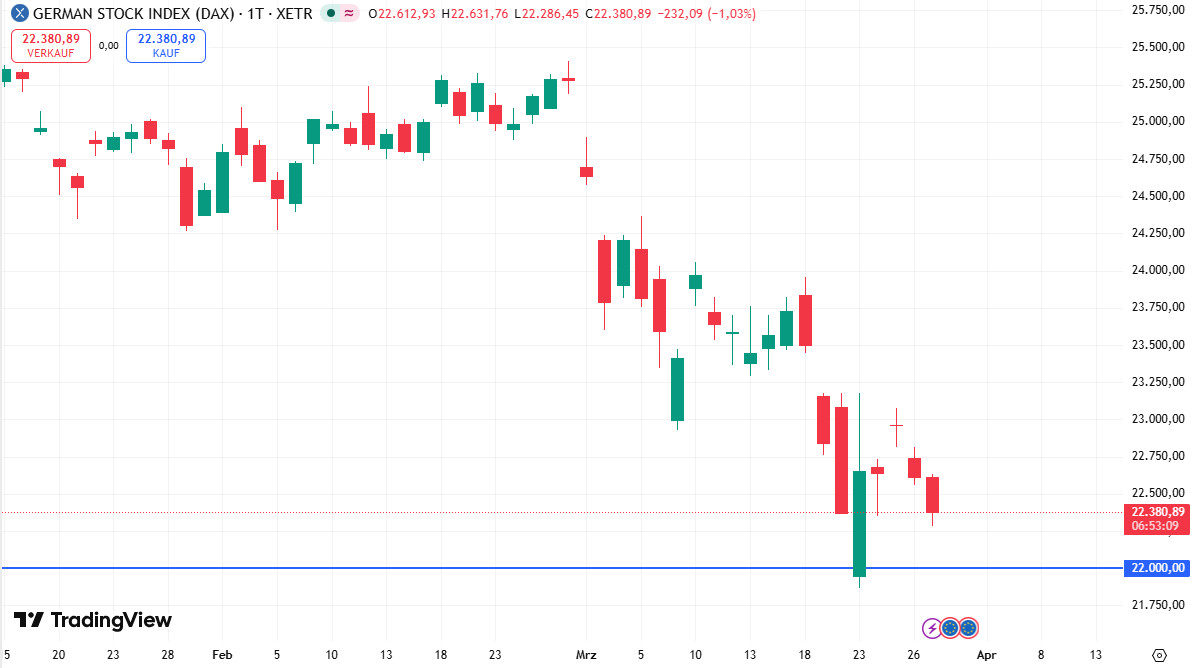
The pressure on stock markets is currently most visible in Germany’s benchmark index, the DAX. It is down around 227 points, or about 1.0%, trading near 23,350 points.
This leaves the DAX somewhat weaker than other European indices. Spain’s IBEX 35 is currently down around 0.63%, trading at approximately 16,850 points.
The French CAC 40 is also posting losses, though more moderate, down about 0.52% at around 7,729 points.
US dollar, gold price and Bitcoin lack clear direction
In the currency market, the US dollar remains largely stable. The EUR/USD pair continues to trade above the 1.15 level, signaling no clear directional move at the moment.
The gold price is also trading within a narrow range and remains below the 4,500 US dollar per ounce level. The lack of momentum highlights the current wait-and-see approach among market participants.
Bitcoin is slightly weaker and has fallen below the 68,000 US dollar mark this morning. Overall, the development suggests that the crypto market is also lacking a clear catalyst at the moment.
Outlook: focus on macroeconomic data
With no new impulses from geopolitics, attention is shifting back toward economic data. In particular, the upcoming inflation figures from Germany are likely to play a key role in the near-term market direction.
At the same time, the situation in the Persian Gulf remains a key risk factor. New developments could quickly trigger stronger market moves and bring the current relatively calm phase to an abrupt end.