After just over 24 hours of military escalation involving Iran, an initial cautious assessment of market reactions can be made ahead of the start of the new trading week. Although the full consequences cannot yet be conclusively evaluated, typical patterns of geopolitical crises are already beginning to emerge.
The central question is whether this represents a short-term shock reaction – or whether a structural risk premium needs to be priced into various asset classes.
Oil Price: Risk Premium Moves to the Forefront
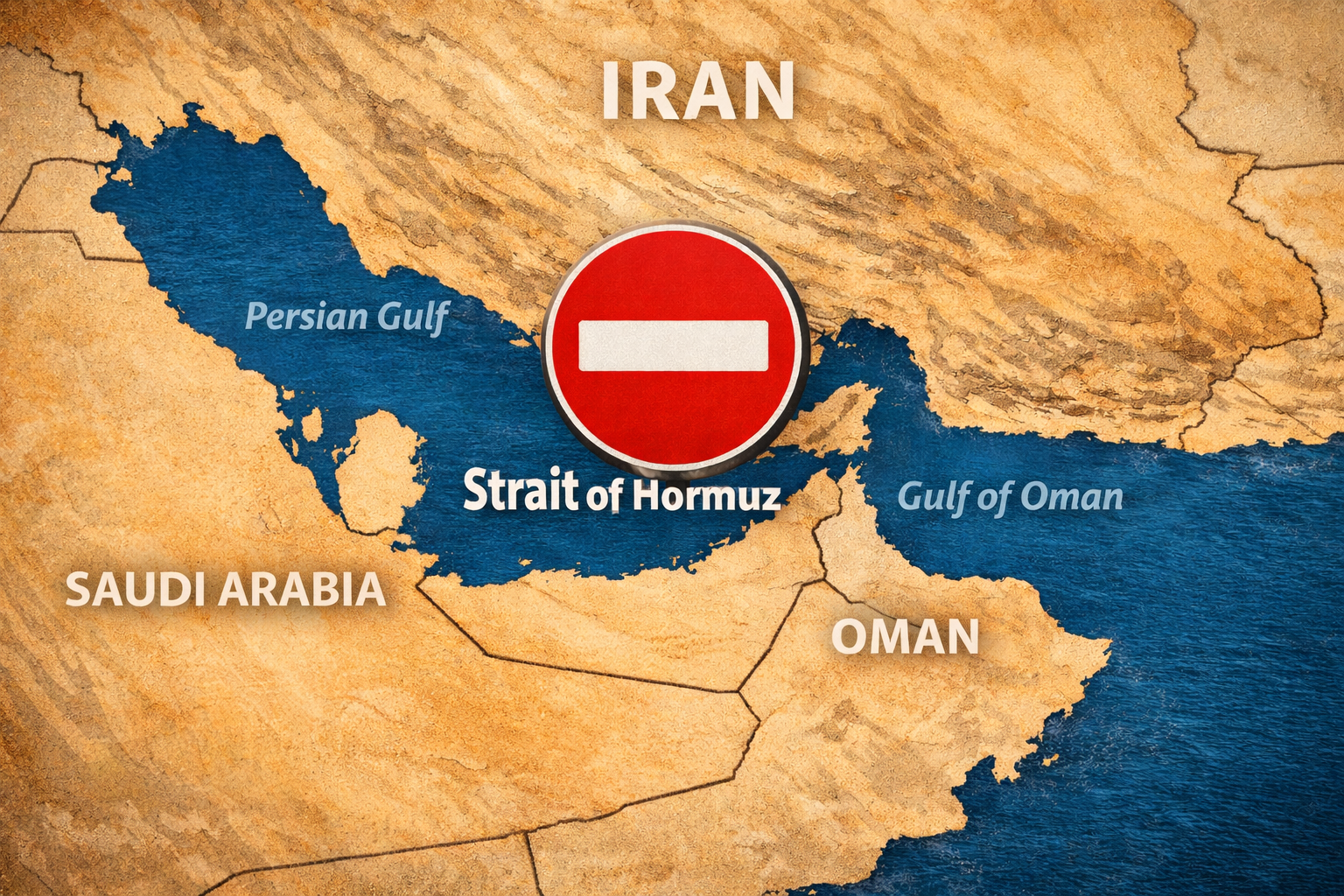
The oil market naturally stands at the center of attention. An escalation in the area surrounding the Strait of Hormuz could be interpreted by market participants as a potential supply risk, as a significant share of global crude oil exports passes through this narrow waterway.
If the situation were to intensify further or if concrete disruptions to shipping were to occur, an additional geopolitical risk premium could be factored into oil prices. In such a scenario, temporarily higher price levels would be conceivable.
If, however, the situation were to remain limited to a contained military operation without affecting energy infrastructure, prices could stabilize again following an initial shock reaction.
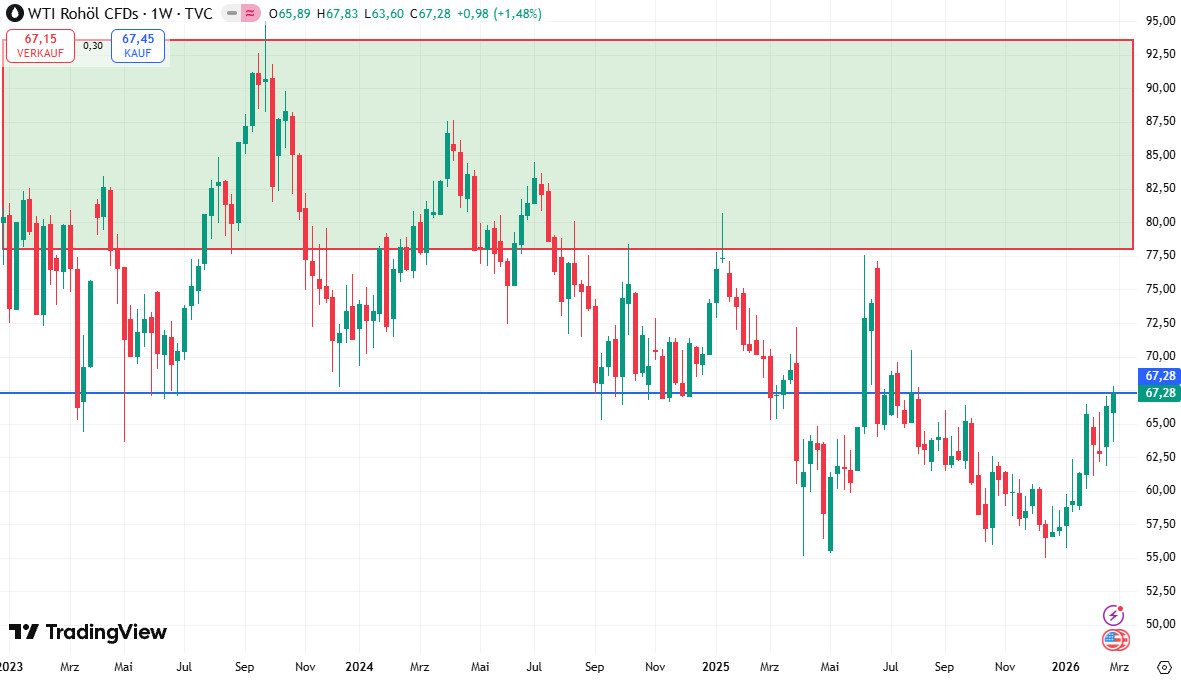
WTI in Focus: The 2024 Price Level
From a technical perspective, particular attention is being paid to the area above 78 USD per barrel. This price level marked a relevant zone of elevated quotations in 2024.
Whether oil prices sustainably move into this area will largely depend on whether the geopolitical situation broadens or whether key energy and transport routes are actually affected.
Gold Price: Potential Safe-Haven Demand
Gold traditionally reacts sensitively during periods of geopolitical uncertainty. In an environment of heightened tensions, investors may increasingly favor defensive assets.
If uncertainty were to persist, gold could remain supported as a hedging instrument. At the same time, it would also be conceivable that part of any risk premium could be unwound in the event of rapid de-escalation.
Movements in the gold market are therefore likely to be driven less by short-term fundamentals and more by overall risk perception.
Equity Markets: A Risk-Off Mode Possible
Equity markets could enter a classic “risk-off” mode. Cyclical sectors and highly valued growth stocks could come under pressure, while defensive sectors may show relative stability.
If the conflict were to remain regionally contained and not disrupt global supply chains, heightened volatility could prove temporary. Historically, many geopolitical events have left only short-term traces on equity markets.
Conclusion
After roughly 24 hours, it can be observed that not the damage incurred so far, but rather uncertainty itself may be shaping market behavior. The decisive factor will be whether the escalation remains regionally contained or whether key energy and transport routes – particularly around the Strait of Hormuz – are actually affected.
Financial markets currently appear to be reacting less to facts than to potential scenarios. How sustainable current market movements turn out to be will largely depend on whether geopolitical risk translates into tangible economic disruptions.