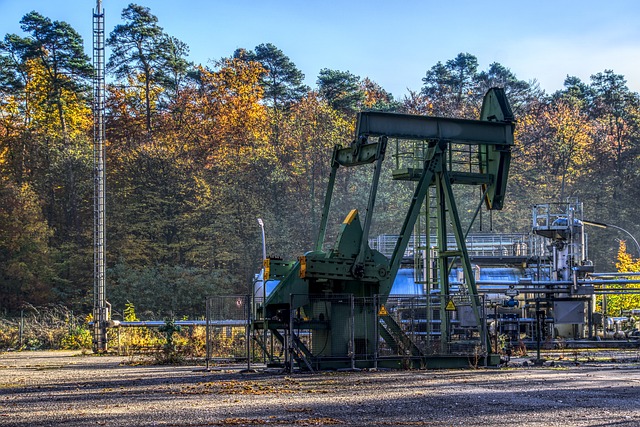
Energy authorities in industrialized countries are reportedly considering a massive release of strategic oil reserves. According to reports, several hundred million barrels of crude oil (up to 400 million barrels) could be brought to the market from government stockpiles. The aim would be to cushion potential supply shortages and limit extreme price spikes in the oil market.
Such interventions are rare and are usually used only in exceptional situations. For financial markets, the key question is therefore not only how strongly oil prices could react. It is also crucial which effects such a measure could have on inflation, currencies and various equity sectors.
Strategic reserves as an emergency instrument
Strategic oil reserves were built after the oil crises of the 1970s in order to compensate for short-term supply disruptions. Governments maintain large quantities of crude oil in underground storage facilities or tanks that can be released in times of crisis.
A coordinated release by several industrialized countries would significantly increase available supply in the market in the short term. This is exactly the goal of the measure: to prevent geopolitical tensions or logistical problems from triggering a massive price shock.
A prominent example is the year 2022. At that time, the United States and other industrialized countries released large volumes of oil from their strategic reserves following the outbreak of the war in Ukraine and the resulting energy crisis. Over several months, hundreds of millions of additional barrels entered the market.
The effect was mainly visible in a stabilization of prices. While the oil market had previously risen sharply, a noticeable easing set in over the course of the year. Although the global economic situation also played a role, the additional supply helped limit extreme price spikes.
In addition to the actual increase in supply, the signaling effect also plays an important role. When governments release strategic reserves, they also send a signal to the market that extreme price movements will not be tolerated indefinitely. Especially speculative market participants may act more cautiously in such situations, as political intervention adds uncertainty for highly leveraged positions.
A reserve release therefore works not only through additional oil supply but also through the expectations of market participants. In tense market phases, this psychological effect alone may already be sufficient to soften price spikes.
Possible effect on oil prices
The prospect of additional supply could put short-term pressure on oil prices or at least limit extreme spikes. Particularly in situations where geopolitical risks have already built a substantial risk premium into prices, a reserve release could partially reduce this premium.
However, the actual effect depends heavily on the market environment. If major disruptions to global supply chains occur, even a large reserve release might have only limited impact. After all, the oil market is global, with roughly 100 million barrels traded every day.
For many market participants, a reserve release therefore primarily has a psychological effect. It signals that governments are prepared to act against extreme price movements.
Impact on inflation and interest rate expectations
A declining or stabilizing oil price would also have macroeconomic consequences. Energy prices are among the most important drivers of inflation because they directly affect transportation costs, production costs and ultimately consumer prices.
If the oil market calms down, inflation expectations could ease somewhat as well. This, in turn, could influence expectations for future interest-rate moves by central banks. For financial markets, this relationship is particularly important because lower interest-rate expectations are often seen as supportive for risk assets.
Which sectors could benefit from lower oil prices
The impact on the equity market would likely be highly sector-specific. Some industries benefit significantly from lower energy prices, while others may come under pressure.
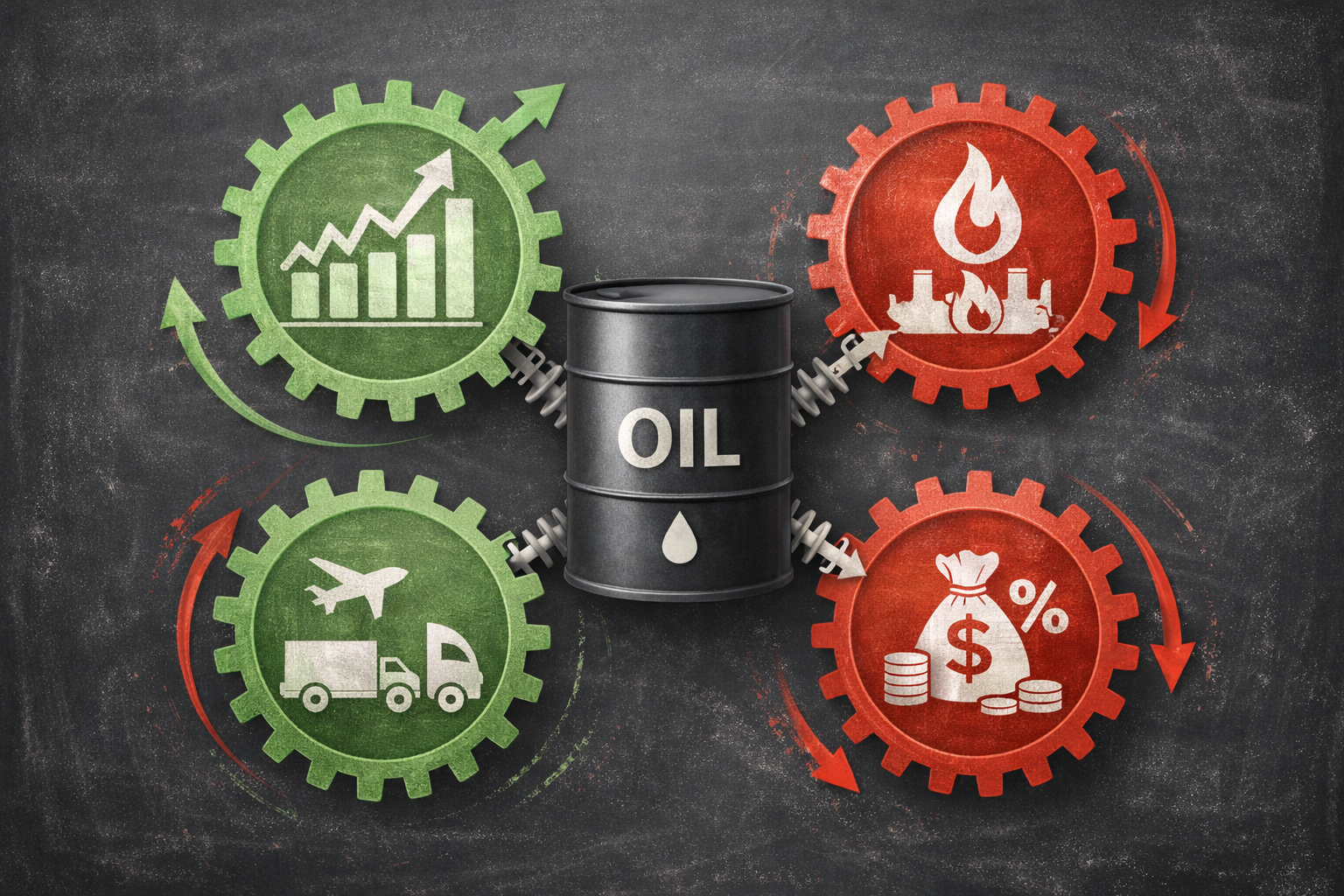
Airlines traditionally benefit particularly from falling oil prices. Fuel represents one of the largest cost components in the sector. Lower kerosene prices can therefore relatively quickly translate into improved margins.
A similar effect applies to logistics and transportation companies. Freight forwarders, parcel delivery services and cargo companies typically benefit from lower diesel prices, as fuel accounts for a large share of their operating costs.
Parts of the chemical industry could also benefit from a weaker oil price. Crude oil and natural gas are key raw materials for many chemical products. Lower energy prices can therefore reduce production costs.
On the other hand, traditional oil and gas producers could come under pressure. Their profits depend heavily on price levels in energy markets. When oil prices decline significantly, this usually affects their earnings outlook.
Currency markets could also react to such developments. The currencies of major energy exporters often respond sensitively to changes in oil prices. If oil prices fall sharply, currencies such as the Canadian dollar or the Norwegian krone sometimes come under pressure, while oil-importing economies tend to benefit.
Winners and losers of falling oil prices
Signal effect for the markets
Besides the direct price impact, the signaling effect also plays a role. When governments tap strategic reserves, it shows markets that the situation is being taken seriously. At the same time, coordinated action can strengthen confidence that extreme market disruptions will be contained.
In the past, financial markets often reacted positively to such measures because they could reduce short-term risks. However, their effect usually remains limited if the underlying geopolitical or economic problems persist.
Conclusion
A massive release of strategic oil reserves could relieve pressure on the energy market in the short term and limit extreme price spikes. For financial markets, the key question will be whether this also influences inflation expectations and therefore the outlook for interest rates.
In equity markets, energy-intensive sectors could benefit most, while traditional oil producers might face pressure. How sustainable these effects will be likely depends largely on how the geopolitical situation and global oil supply evolve in the coming weeks.