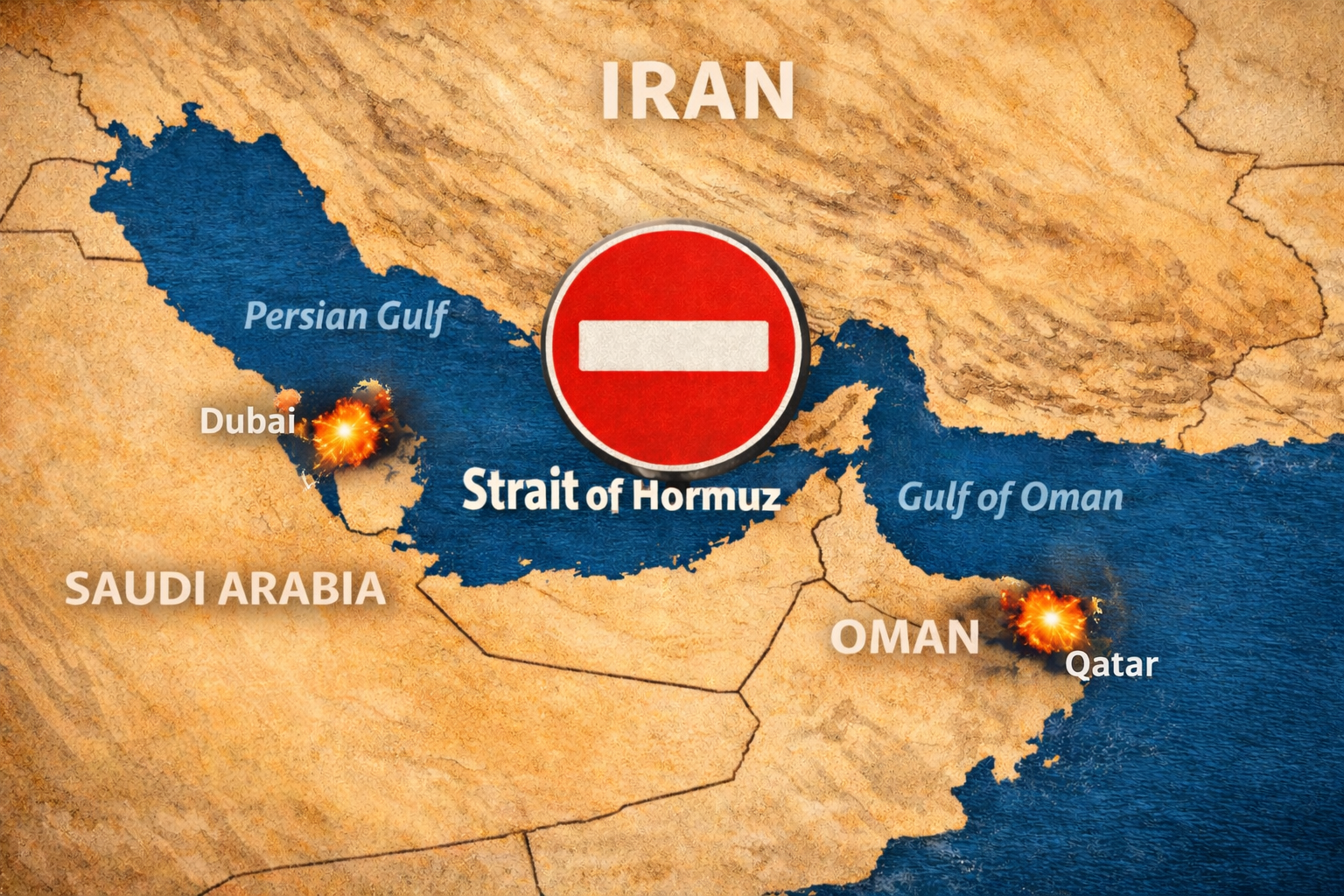
New Iranian attacks on Gulf states are causing movement on the commodity markets.. While oil prices are rising following reports of attacks on targets in Dubai and Qatar, gold is showing surprisingly little strength and has once again fallen below the 5,100 USD level.
The market reaction highlights once again that geopolitical risks are currently being processed very selectively. While energy prices react sensitively to potential disruptions in the Gulf region, a broad flight into traditional safe-haven assets has so far failed to materialize.
Oil reacts immediately to attacks in the Gulf region
Oil prices rose noticeably following reports of attacks around several Gulf states. Market participants react particularly sensitively to developments in this region, as a significant share of global oil production as well as key transportation routes are located in the Persian Gulf.
Even limited military events can therefore trigger short-term risk premiums in oil prices. The key question remains whether actual disruptions to production or transportation capacity occur. As long as these do not materialize, many movements remain strongly driven by headlines.
Gold falls despite geopolitical tensions
At the same time, the weakness in gold prices is notable. Despite the tense situation in the Middle East, the precious metal has once again fallen below the 5,100 USD level.
A strong flight into traditional safe-haven assets is therefore still absent. Instead, the market shows that several forces can act simultaneously. A stronger US dollar and the recently stable performance of equity markets may currently be limiting upward pressure on gold.
Markets react selectively to geopolitical risks
The current market reaction highlights a pattern that has appeared several times in recent days: geopolitical risks do not automatically affect all asset classes equally.
While oil prices react immediately to potential supply risks, other markets remain considerably more stable. Investors currently appear to classify the events as a more regionally contained risk rather than triggering broad risk aversion.
Bitcoin remains near key levels
Bitcoin, meanwhile, continues to trade near important technical areas and is currently holding around the 72,000 to 73,000 USD range.
After previously reclaiming the 69,000 USD zone, many market participants are now focusing on the 73,000 USD region as the next possible test area.
Conclusion: Oil reacts – safe-haven response remains limited
The attacks in the Gulf region once again illustrate how differently financial markets can react to geopolitical events. While oil prices react sensitively to potential supply risks, a broader flight into defensive assets has not yet emerged.
Gold is trading below 5,100 USD despite the tense situation, while equity indices are again showing increased pressure during the afternoon session. Whether this develops into broader risk aversion will likely depend heavily on how the situation in the Middle East evolves in the coming days.